








Long before calculators, computers and smartphones, people first had numbers to count, trade and calculate. They needed a simple way to keep track and the story of the Abacus began from this basic human need.

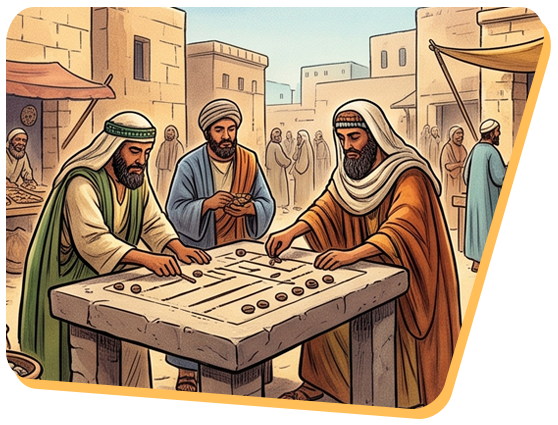
The earliest forms of abacus-like calculation used lines, grooves, pebbles or counters. Ancient civilisations, including Mesopotamia, Egypt, Greece and Rome, used different forms of counting boards and devices to make calculations easier.

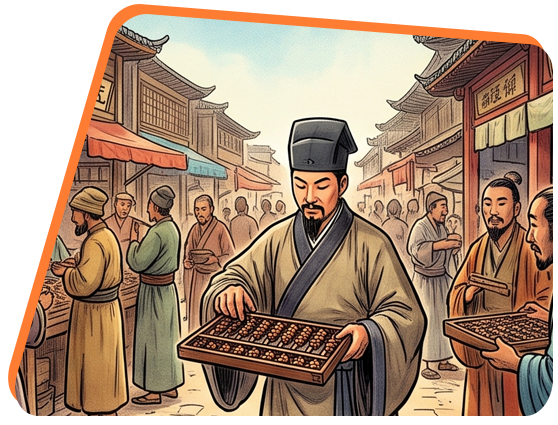
In China, the calculating device developed into the Suanpan, a framed abacus with beads arranged on rods. It became an important tool for everyday calculation, commerce and mathematics. It could be used for addition, subtraction, multiplication and division, and even more advanced calculations.


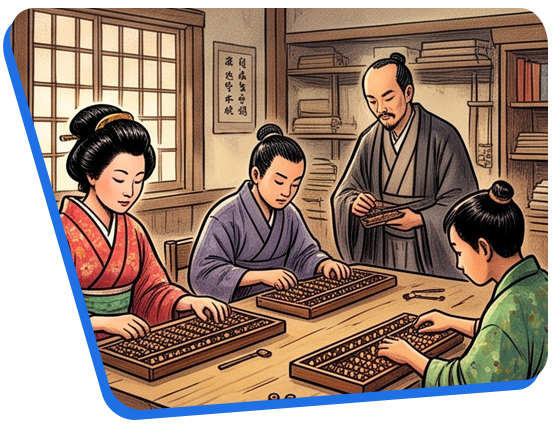
The Abacus travelled across East Asia and reached Japan, where it evolved into the Soroban. The Japanese refined its design and calculation methods, eventually developing the familiar one-bead-above and four-beads-below structure.

By the 20th century, Soroban calculation had become closely connected with mathematical education in Japan, and abacus proficiency testing and competitions became established.


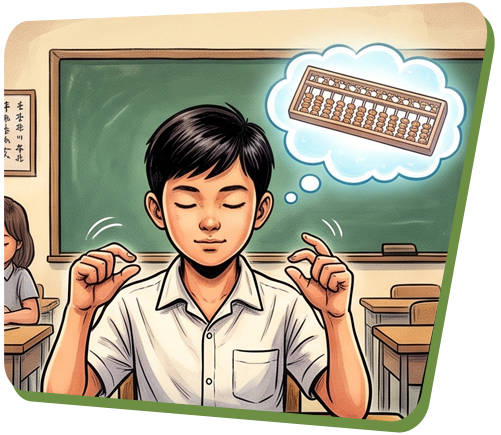
Abacus learning began moving beyond the physical instrument. With practice, learners were trained to visualise the beads in their minds and perform calculations mentally.
This transformed the Abacus from simply being a calculating tool into a method of learning and practising mental arithmetic.
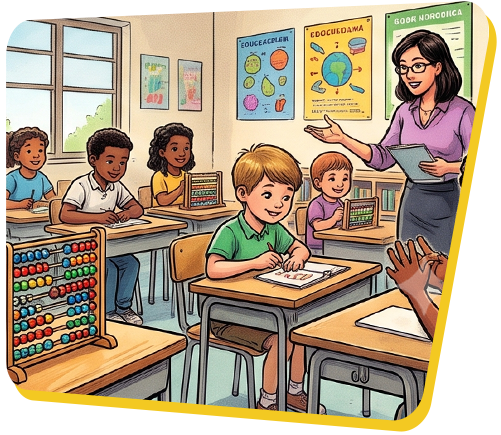
Today, Abacus-based learning is used in educational programmes across many countries. The basic idea remains wonderfully simple: See it, Move it, Imagine it, Calculate it. Thousands of years after people first used physical counters to understand numbers, the Abacus continues to find a place in modern learning.