

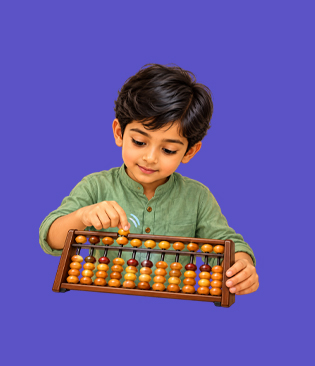
Abacus activities require children to pay attention to numbers and movements. Regular practice encourages them to stay focused on a task and complete it carefully.
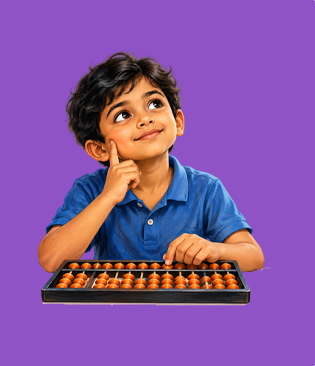
First, children see the beads. With practice, they begin to imagine them. This mental visualisation becomes an important part of Abacus-based mental calculation.
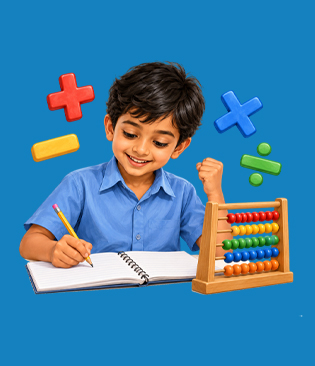
Addition, subtraction, multiplication and division become familiar through repeated practice. Children gradually become more comfortable working with numbers.
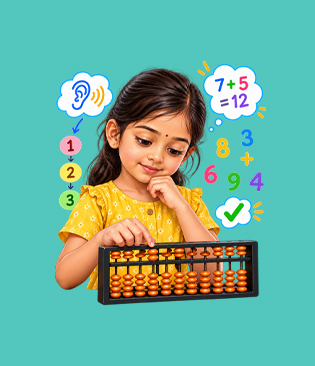
Abacus learning encourages children to listen carefully, follow steps and check their calculations. Little by little, they learn that getting the right answer is as important as getting there quickly.
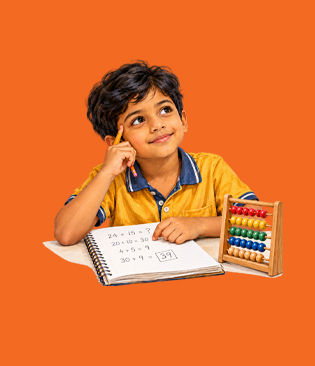
Every calculation is a small problem waiting to be solved. Children practise breaking it down, thinking through it and finding an answer
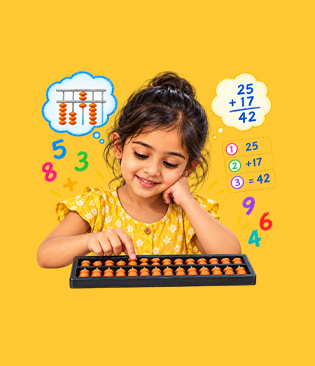
Remembering numbers, bead positions and calculation steps gives children regular opportunities to exercise their working memory.
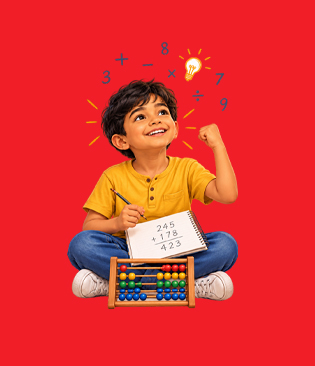
A difficult calculation becomes easier after enough practice. That experience teaches children something valuable:
“I can figure this out.”
Perhaps the biggest benefit is not a number on a stopwatch. It is the habit of practising, concentrating, making mistakes, trying again and improving.